From Draft NOtices, January-March 2026
Book Review
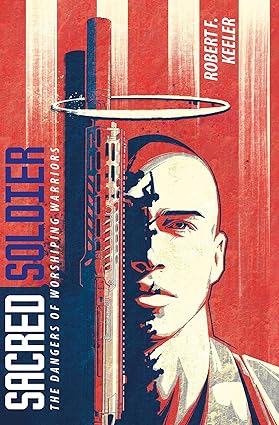
Sacred Soldier:
The Dangers of Worshipping Warriors
Robert F. Keeler
Interlink Books, 2024
Recommended Reading
— Isidro Ortiz
In his Presidential farewell address in 1961, then President Dwight D. Eisenhower urged his fellow Americans to remain vigilant about the rise of what he called the “military-industrial complex.” His statement surprised many as it came from a war hero whose military record suggested that he would be a fervent supporter of increasing military influence.
As the author of Sacred Soldier notes, despite Eisenhower's status, the warning has gone largely unheeded. Instead, idolatry of the military emerged and continues to surge across generations. While the title of the book may suggest that the book is a criticism of the American soldier, Pulitzer Prize-winning journalist Robert E. Keeler intentionally, passionately and critically focuses on society's unabashed worship of the military and its significant and far-reaching implications. Early in the book he makes it clear that his work is not simply a reportorial work. Instead, as he notes, his book intends to send the message that many vital questions will remain unasked “as long as we cling to our idolatrous attitude toward the military, as long as we lionize it but ignore its inner workings and its flaws.”
Keeler draws on his lived experience with the military, an experience that began as a compliant draftee in 1965 whose military experience and journey took many unexpected twists and turns and eventually proved transformative. Drawing on his rich experience and standing as an accomplished journalist, he complements his personal observations with data obtained from interviews with scholars, journalists, former and current military members, and activists. These invocations enable a fuller understanding and incisive critique and lend credibility to his analysis and conclusions. They also protect the book from being dismissed as a partisan rant by a disgruntled former draftee and ignorant critic of the military.
Keeler begins Sacred Soldier with an introduction that is succeeded by nine chapters, each of which addresses timely and significant issues and related dimensions of the military. These include: electoral politics and veterans, such as Trump supporter and foreign policy hawk United States Senator Tom Cottons; sexual assault and harassment in the military; the possible return of the draft; the problematic nature of medical services for veterans; and defense spending.
Throughout the book, Keeler raises thought-provoking questions related to the military. Chapter Two, “Why They Join: Glory, Old Glory, Or Just a Job,” is likely to be of particular interest to those engaged in counter-recruitment activism. Here Keeler illuminates the motivations for joining the military and examines how military recruiters operate in the face of declining interest in military enlistment among recent generations and intense pressure to achieve recruitment targets. Keeler also highlights the work of counter-recruitment activists across the country, such as Rick Janhkow of COMD and Project YANO. In Jahnkow's case, the counter-recruitment activism spans more than forty years of pioneering, creative, and resourceful leadership and resistance in San Diego County, which has been described as “America's most militarized zone.”
Keeler is a perceptive observer who is unafraid to note the contradictions, myths and illusions in the worshipping of the military. For example, he notes that despite massive military spending, the United States “has not won a war” since World War II. Nonetheless, public and Congressional support remain steadfast, which begs the question as to the purposes of the spending.
To his credit, Keller attempts to go beyond just critiquing the military. In the concluding chapter, he urges his fellow Americans to resolutely set their personal attitudes “a few notches below idolatry,” and to go beyond the “Thank you for your service” mantra that is a key element of the worshipping of the military in everyday life. He also recommends possible concrete actions such as expressing doubts about the latest war -- a timely suggestion given President Trump's attacks on Venezuela -- and asking, “Really?”, when politicians claim that our troops are “fighting for freedom.”
I look forward to Keeler continuing to share his insights and recommendations, especially regarding the military under President Trump and Secretary of Defense (“War”) Hegseth. Both, it appears, have sought to repurpose the military for the advancement of their own agendas and power. In the meantime, I highly recommend Sacred Soldier to anyone concerned about the pervasive presence and influence of the military and the critical implications of the idolatry of the military.
This article is from Draft NOtices, the newsletter of the Committee Opposed to Militarism and the Draft (https://www.comdsd.org/).