From Draft NOtices, January-March 2026
— Rick Jahnkow
In the last two years, most of the military's numerical goals for first-time enlistments were reached by lowering acceptance standards and using special pre-boot camp preparation programs to boost the acceptance rate of applicants who would ordinarily have been rejected under past standards. While these measures made recent recruiting goals reachable, Pentagon leaders are now expressing concern about a new possible recruiting crisis driven by societal trends, including a sharp drop in births that began in 2007. The impact of this downward population trend will be to further shrink the pool of eligible recruits despite the lowering of enlistment standards.
To address future recruiting challenges, Secretary of Defense (a.k.a. Secretary of War) Pete Hegseth issued a memorandum in June 2025 announcing the formation of a Military Service Recruitment Task Force. According to Hegseth, the task force's purpose is to analyze current recruiting efforts and trends and formulate “a targeted and strategic approach to strengthen recruiting efforts” across all military branches.
So far, none of the task force's reports have been made public. However, one controversial idea that was apparently discussed by some Pentagon officials is a campaign to call on young people to “honor” Charlie Kirk's legacy by joining the military. As reported by NBC News on September 18, 2025, the campaign would include turning school chapters of Kirk's Turning Point USA organization into recruitment centers. NBC's report stated, however, that there has been pushback by some Pentagon leaders and it's uncertain if the campaign will ultimately occur. According to an Al Jazeera report, a Pentagon spokesperson has told Fox News that no such plan is being considered.
The Pentagon shooting itself in the foot
While the shrinking demographics of military-age youth will present a difficult challenge to meeting enlistment quotas, other developments generated by President Trump and the Pentagon itself may cause even greater barriers to meeting enlistment quotas. This includes anti-DEI measures like the removal of women and people of color from some military leadership positions, the banning of transgender enlistees, the termination of programs that were intended to address gender discrimination and military sexual assault, and the restoration of military base names that honor pro-slavery leaders of the Civil War. These policy changes could drive away people in underrepresented communities that were previously deemed critical to meeting military force level requirements.
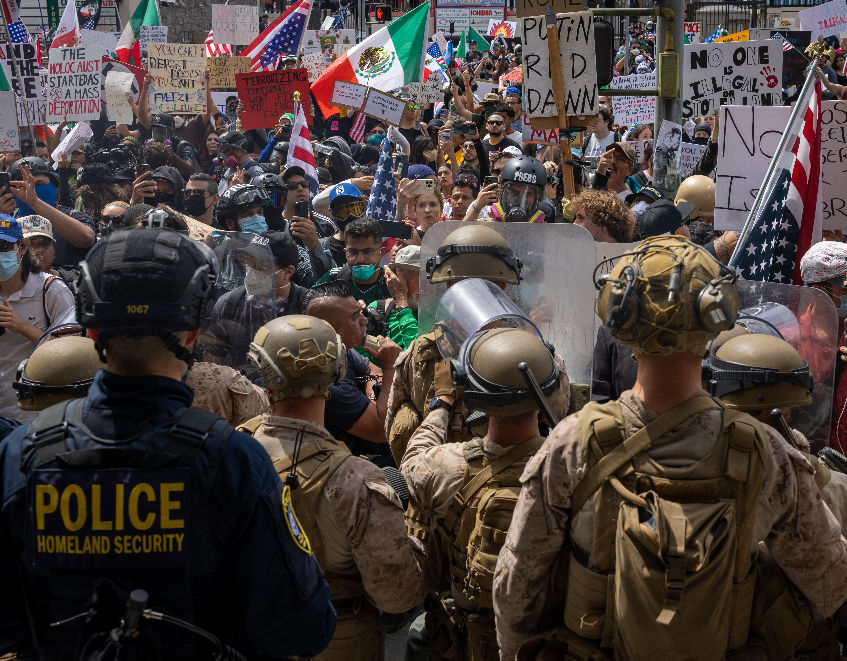
Other developments that will discourage some from enlisting include the unpopular use of military units to carry out immigrant deportations and support the aggressive actions of agencies like ICE, as well as Trump's decision to use military forces to invade and occupy U.S. cities run by local governments he disagrees with. The images of Marines and National Guard troops facing down civilian protesters are conveying a fascistic purpose that will be hard for recruiters to dodge.
Additionally, young people will be dissuaded from enlisting by rhetoric from Trump that suggests U.S. armed forces could be used to annex territory in places like Greenland, Gaza, Canada and Panama. Plus, Trump has now decided to wage war against Venezuela and threaten military strikes in Mexico, both of which can intensify resistance to military recruitment by Latinx community members who make up 19 percent of the U.S. population.
Already, counter-recruitment organizations have been strategizing ways to reference Trump administration policies in their educational messaging. One tool for this is a bilingual flier produced by Project YANO with the title, “Warning: Some Things You Should Know Before Joining the U.S. Military” (downloadable at projectyano.org). The flier lists ways that military members could be forced to carry out Trump's controversial political agenda.
More groups are needed to take up counter-recruitment organizing. For information on resources that can be used for that purpose, contact the National Network Opposing the Militarization of Youth (nnomy.org).
This article is from Draft NOtices, the newsletter of the Committee Opposed to Militarism and the Draft (https://www.comdsd.org/).