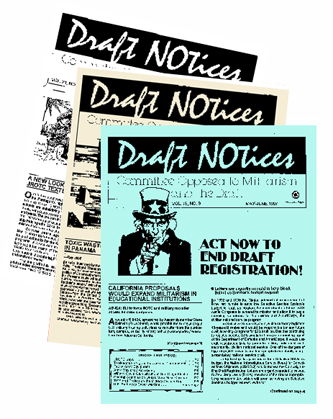
From Draft NOtices, July-August 2005
—Rick Jahnkow
It is encouraging to observe the contemporary anti-war movement's recent shift toward giving greater attention to military recruiting. This means that a growing number of individuals and organizations now understand that there is an organizing strategy that can be employed with much more effectiveness than the symbolic protest that has characterized most anti-war activism since September 11, 2001. People are finally looking deeper into the issues and understanding that no matter how frightening and uncontrollable the Bush administration may seem, it has a very reachable Achilles heel when it comes to needing human resources to wage its wars.
Nevertheless, there are reasons to be cautious in our optimism about the shift toward counter-recruitment work. In the organizing choices we now see, there is evidence that many activists still do not perceive the larger picture that surrounds the issue of recruitment. They are not understanding why the problem deserves much more than a tactical treatment, and as a result, counter-recruitment organizers are sometimes emphasizing very limited goals that look at the problem merely at the individual level and not at the equally important community and societal levels. The phenomenon parallels the pattern we experienced during the anti-Vietnam War movement when, for many, the predominant tactical focus was on saving individuals from the draft. That approach benefited a limited number of potential draftees, but it also missed many others who were still drafted. More importantly, it did not affect the larger institutional issues that made Vietnam possible, even though the war was eventually halted. The consequence was 30 years of gradual remilitarization that has led us to where we are now.
Read more ...