- Rick Jahnkow
- Articles Archive
- Hits: 4781
Fourth Attempt to Pass Bill Linking Draft Registration to DMV in California
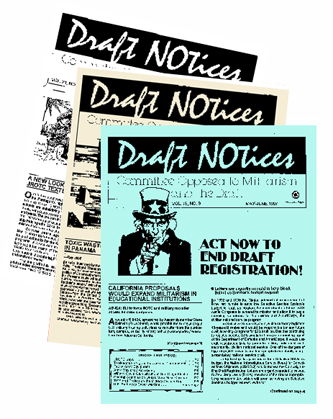
From Draft NOtices, July-September 2007
—Rick Jahnkow
Another attempt is being made to boost draft registration compliance in California by enlisting the aid of the Department of Motor Vehicles. On February 23, Assembly Bill 1661 was introduced in the state legislature to require the DMV to add a special notice about registering with the Selective Service System on the form used to apply for a driver’s license or state identification card. The notice would advise male applicants that they are required to register with the federal Selective Service System at age 18 and describe the various possible consequences for failing to comply. The applicant would also be offered an opportunity to have the information in his license/ID application form used to register him with Selective Service.
In recent years, Selective Service and its supporters have been seeking to convince states to make draft registration a condition for receiving a driver’s license. Most states have passed laws to implement such a requirement, but California, which may have the largest number of nonregistrants in the nation, has declined to pass three such proposals.
To reduce resistance this time, the proposal was watered down so that it doesn’t make draft registration a condition for receiving a license or DMV-issued ID card, but it would still serve to aggressively promote registration and involve the DMV in the registration process. It was introduced by Assembly Member Paul Cook (Rep.), along with Assembly Member Bill Maze (Rep.) as the principal co-author. Other co-authors are Assembly Members Arambula (Dem.), Parra (Dem.), and Villines (Rep.), and Senators Correa (Dem.) and Runner (Rep.).
On April 19, the bill passed the Assembly Transportation Committee by a vote of 13-0 and was scheduled for consideration by the Assembly Appropriations Committee on May 2. The Appropriations Committee legislative analyst pointed out in his pre-hearing report that the bill violated the state constitution, which prohibits the use of Motor Vehicle Account funds for any uses that are not vehicle-related. In this case, some of those funds would be used to process information for the federal Selective Service System.