From Draft NOtices, April-June 2023
- Davíd Morales
 On February 9, 2023, the Project on Youth and Non-Military Opportunities (Project YANO) sent a letter to the trustees of the San Diego Unified School District (SDUSD) calling on them to halt the involuntary enrollment of students in the Junior Reserve Officers’ Training Corps Program (JROTC).
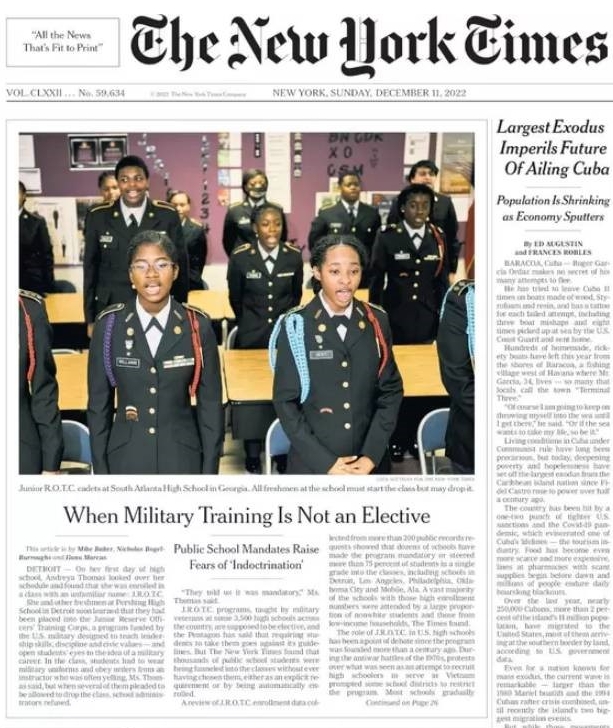
Project YANO felt compelled to write the letter because of a recent New York Times investigation that revealed thousands of high school students were being involuntarily enrolled in JROTC at schools across the country. San Diego Unified was specifically mentioned in the Times report as one of the districts where data suggest that this practice has been occurring, particularly at high schools in which the majority of students are students of color.
Project YANO’s letter follows a similar expression of concern sent to the district by members of the Military Law Task Force of the National Lawyers Guild. In their letter to the district, Task Force attorneys cited section 51750 of the California Education Code, which states:
The governing board of any school district maintaining a secondary school may establish in the school classes in military science and tactics complying with the laws of the United States made and provided with reference to Reserve Officer Training units in educational institutions.
No student enrolled in any such school shall be required to enroll in any course in military science and tactics.
Read more ...