- Rick Jahnkow
- Articles Archive
- Hits: 3032
The “Groundhog Day” Syndrome and Progressive Movements in the U.S.
From Draft NOtices, October-December 2022
— Rick Jahnkow

In 2003, I wrote a critique of the U.S. anti-war movement that included a reference to the 1993 movie “Groundhog Day.”For those of you unfamiliar with the film, it’s about a TV reporter, played by Bill Murray, who is sent to cover the traditional observance of a groundhog’s emergence from its burrow on February 2nd. According to legend, if the animal does not immediately return to its den, it will portend an early arrival of spring.
In the film, the journalist wakes up the next day and discovers he is trapped in a time loop that keeps returning him to February 2nd. When he gets up every morning and goes about his business, he encounters the same people starting their day the same way as before. Unlike those around him, he is conscious of the time loop and knows exactly what to expect each day. Despite his awareness of the cycle, he can’t figure out how to stop it, and each morning begins again with Groundhog Day.
The context for my reference to the film in 2003 was the beginning of yet another devastating war launched by the U.S. and its allies. The peace movement, then, was like the Bill Murray character, having witnessed many similar beginnings of U.S. warfare during the previous 50 years, and yet still unable to prevent their repetition.
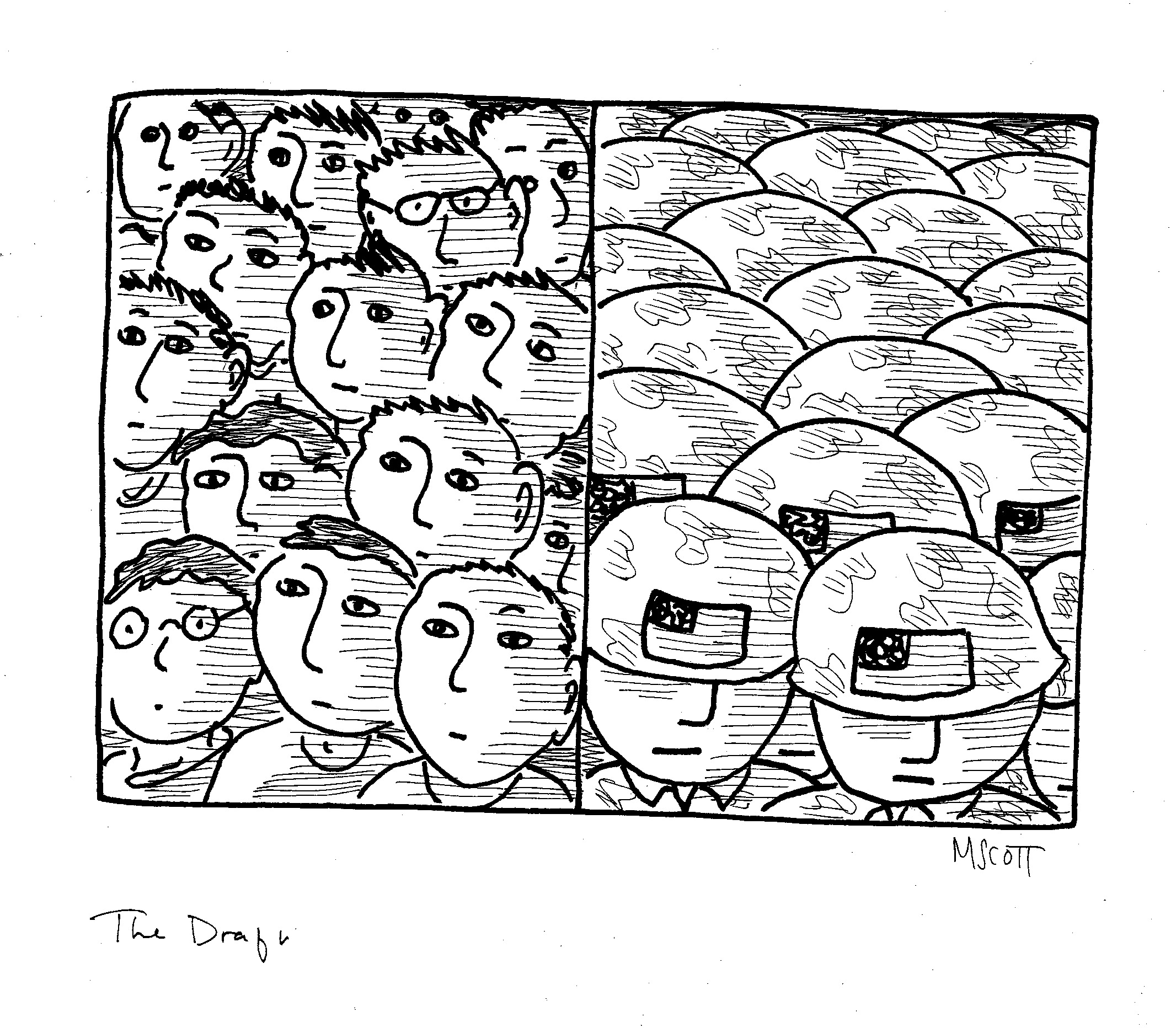 Once again, a legislative proposal has been made to require women to join men in registering with the Selective Service System for a possible future military draft. As of this writing, it is contained in the Senate Armed Services Committee’s draft of the National Defense Authorization Act (NDAA) for fiscal year 2023. The bill must now go to the full Senate for a floor vote.
 In the summer of 2020, I was recruited by the non-profit Project on Youth and Non-Military Opportunities (Project YANO) to review core textbooks used by the U.S. military in the high school Junior Reserve Officers Training Corps (JROTC) program. Project YANO organized a team of 15 reviewers that consisted of individuals with backgrounds in either classroom teaching or education activism, or with special knowledge of subjects that JROTC claims to address in its curriculum (e.g., U.S. and world history, geography, leadership methods, etc.).