- Rick Jahnkow
- Articles Archive
- Hits: 3588
Bill Linking California Licenses to Draft Registration Advances
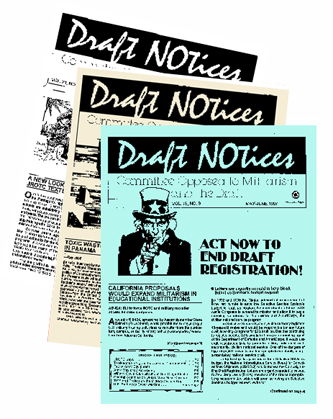
From Draft NOtices, July-September 2015
— Rick Jahnkow

Assembly Bill 82 passed the California Assembly on June 2. The vote was 73-2, which cleared the way for it to move on to the senate side of the state legislature. As of this writing, it was scheduled for a June 30 hearing before the Senate Transportation and Housing Committee. If it passes that committee, it will go to an appropriations committee, which is where the same proposal died six previous times.
The bill states that in order to apply for a license or license renewal, males would have to give their permission for the California Department of Motor Vehicles to automatically register them with the Selective Service System, the federal agency that would conduct any future military draft. The requirement would apply to all male license applicants up to age 26, regardless of their citizenship or residency status.
Opponents of the bill have included groups that advocate on behalf of undocumented immigrants. AB 82 concerns them because one of the federal agencies that SSS has a formal data-sharing relationship with is the U.S. Customs and Immigration Services (USCIS), the Department of Homeland Security agency that oversees actions taken against people who are without legal residency. California now issues drivers’ licenses with a special waiver for individuals who cannot prove they are legal residents, and the state licensing law says that their residency information in DMV records cannot be used as a basis for investigating or detaining them. The state, however, would have no legal power to regulate what USCIS might do with information it receives from SSS, including DMV data identifying individuals who are without proof of legal residency.